
Marsa International Shipping LLC is a leading shipping and logistics company in Oman, offering reliable air freight, sea freight, GCC land transport, customs clearance, and freight forwarding services to businesses across Oman and international markets.
Choosing the right container shipping method can have a significant impact on freight costs, cargo handling, transit planning and delivery arrangements. For businesses involved in international trade, one of the most common decisions is whether to use FCL (Full Container Load) or LCL (Less than Container Load) shipping.
Understanding the difference between FCL and LCL can help importers, exporters, manufacturers, wholesalers and distributors select a transportation option that matches their cargo volume and business requirements.
Marsa Shipping supports containerised cargo movements through sea freight and related logistics solutions, helping businesses plan shipments based on cargo type, volume, origin, destination and delivery requirements.
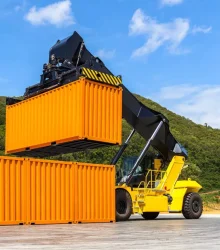
FCL shipping, or Full Container Load shipping, means that a single shipment uses an entire shipping container. The container is allocated to one shipper, although the cargo does not necessarily have to physically fill every available space.
FCL is commonly considered by businesses that have a larger volume of cargo or want greater control over how their goods are packed and transported.
Depending on the shipment, businesses may use standard container sizes such as 20-foot or 40-foot containers. The appropriate container depends on cargo volume, weight, dimensions, commodity and shipping requirements.
FCL can offer several advantages for suitable shipments:
For businesses with enough cargo to justify a dedicated container, FCL can provide a straightforward solution for international sea freight.
LCL shipping, or Less than Container Load shipping, is designed for shipments that do not require an entire container. Cargo from multiple shippers is consolidated into the same container for transportation.
Instead of paying for the full container, businesses generally pay based on the space or volume occupied by their cargo, subject to the applicable shipping and handling charges.
LCL can be useful for smaller shipments where using a complete container would not be practical.
LCL can be appropriate for businesses that:
However, LCL involves consolidation and deconsolidation, which can mean additional cargo handling compared with a dedicated FCL shipment.
The main difference between FCL and LCL is how container space is used.
| Factor | FCL Shipping | LCL Shipping |
|---|---|---|
| Container space | Dedicated to one shipment | Shared by multiple shipments |
| Best suited for | Larger cargo volumes | Smaller consignments |
| Cargo handling | Generally fewer consolidation stages | More handling may be involved |
| Pricing basis | Container and shipment costs | Often based on cargo volume/space |
| Packing control | Greater control | Shared container environment |
| Typical use | Large imports/exports | Smaller international shipments |
These are general considerations. Actual costs, transit times and handling requirements vary according to the shipping route, carrier, port, cargo and service arrangement.
There is no single option that is best for every business. The right choice depends on several factors.
Cargo volume is one of the most important factors.
If your shipment occupies a substantial amount of container space, FCL shipping may be more suitable. If you only have a smaller consignment, LCL can allow you to use only the space required for your cargo.
Businesses should compare the total landed cost rather than looking only at the basic freight rate.
LCL can be attractive for smaller shipments because businesses do not need to book an entire container.
However, LCL pricing can include various origin and destination handling charges, consolidation fees and other applicable costs. Therefore, comparing the complete shipment cost is important.
For larger shipments, FCL may become more economical when the cost of using a full container is compared with the cumulative cost of shipping the same volume through LCL.
Some goods are more sensitive to handling, movement or contamination risks. FCL provides a dedicated container, which can give the shipper greater control over the cargo environment and packing arrangement.
LCL cargo shares container space with other consignments and passes through consolidation and deconsolidation processes.
Businesses should therefore consider the nature of the goods before selecting a shipping method.
Transit planning can differ between FCL and LCL depending on the route, consolidation schedule, carrier and destination arrangements.
If a shipment has a strict delivery requirement, businesses should check the expected schedule and available services before booking.
The fastest or most economical option can vary from one trade lane to another.
Origin and destination ports can influence the available FCL and LCL services, handling arrangements and overall costs.
For businesses shipping through Oman, the logistics plan may involve ports such as Sohar, Salalah or Duqm, depending on the cargo and selected route.
From the port, cargo may then require customs coordination, inland transportation, warehousing or final delivery.
Oman is an important logistics location connecting businesses with GCC, Asian, African and other international markets. Companies importing and exporting through Oman may use either FCL or LCL depending on shipment volume and requirements.
For example, a manufacturer exporting several pallets or a large quantity of products may find FCL more suitable. A small business sending a limited quantity to an overseas customer may consider LCL.
The choice should be based on the complete logistics requirement, rather than simply selecting the option with the lowest advertised freight rate.
Businesses can sometimes focus only on the headline freight price and overlook additional charges.
Common points to check include:
It is also important to provide accurate cargo dimensions, weight, quantity and commodity information when requesting a quotation. Incorrect shipment details can lead to changes in pricing or operational requirements later.
Choosing between FCL and LCL is only one part of international container logistics. Businesses may also need cargo pickup, documentation, customs coordination, port handling, inland transportation and final delivery.
Marsa Shipping provides container shipping and logistics solutions designed around individual shipment requirements. Depending on the cargo and destination, services can include FCL and LCL shipping, sea freight, land transportation, customs coordination, warehousing and door-to-door logistics.
Our team can review shipment details such as cargo type, volume, weight, origin, destination and delivery requirements to help identify an appropriate logistics approach.
The answer depends on your shipment.
FCL may be more suitable when:
LCL may be more suitable when:
Before making a decision, compare the total shipping cost, cargo handling, expected transit schedule, destination requirements and delivery arrangements.
Selecting between FCL and LCL becomes easier when the shipment requirements are clearly understood. Cargo volume, commodity, route, delivery schedule and overall logistics costs should all be considered before booking.
If you are planning container shipping from or to Oman, Marsa Shipping can help coordinate the required freight and supporting logistics services.
Contact Marsa Shipping to discuss your cargo requirements and explore the right FCL or LCL shipping solution for your business.
Get the latest shipping and logistics updates delivered to your inbox.
Efficient freight forwarding with end-to-end supply chain solutions for Oman’s trade and logistics.
Copyright © 2026 Click Crafters Technology. All Rights Reserved.